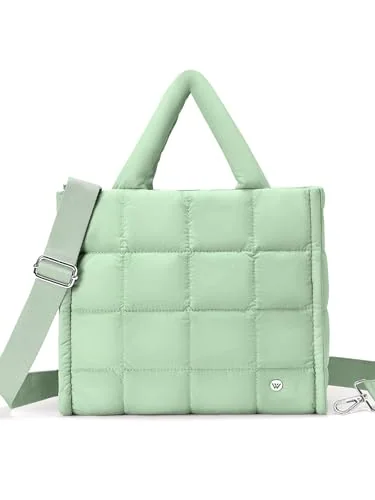
Tote Bag
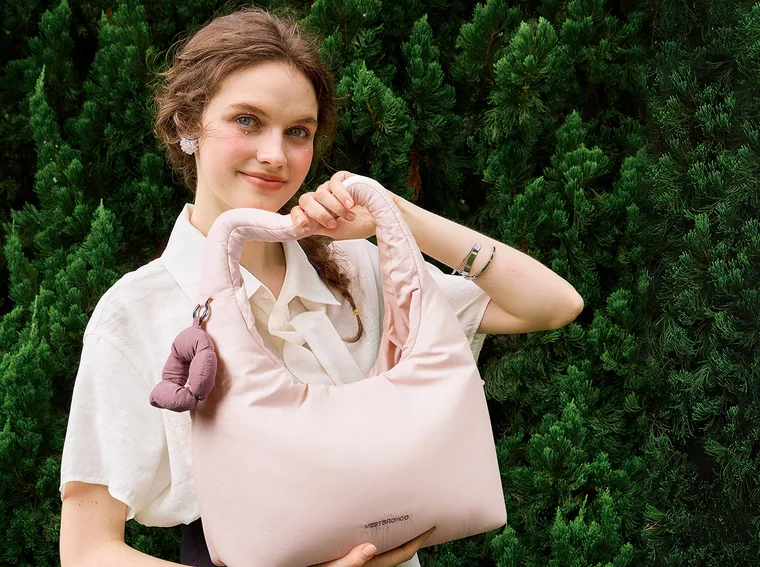
Small Puffer Tote Bag, Green
12.6 x 11.0 x 5.5 in · puffer
4.6 out of 5 · 641 ratings$19.99
Nine inches of bag is not nine inches of room. Here is what the numbers on a product page mean once a phone, a bottle and a pair of sunglasses are involved.

Three numbers on a product page tell you the outside of a bag. What you want to know is the inside, and the two are further apart than they look.
This piece does three things. It explains where the missing inches go, it gives the real footprint of the objects everybody carries, and it prints a ladder of our own silhouettes so you can compare shapes without opening one page at a time.
Nothing here is a rule of thumb borrowed from somewhere else. The measurements are ours.
A bag described as ten inches wide is ten inches on the outside, at the widest point, usually across the base. Four things eat into that before you put anything in.
The practical rule from measuring our own range: subtract about an inch from the stated width and an inch and a half from the stated height to get the usable opening. A ten by seven inch bag behaves like a nine by five and a half inch space.
Depth is the number people ignore and the one that decides most of it. Under three inches of depth, a bag holds flat things. Over four, it holds a bottle standing up. That single threshold changes what a bag is for.
We measured what our own team carries, with a ruler, on a table.
| Item | Footprint | Depth it needs | Notes |
|---|---|---|---|
| Large phone in a slim case | 6.4 x 3.1 in | 0.5 in | A rugged case adds a third of an inch each way |
| Slim card wallet | 4.3 x 3.1 in | 0.5 in | A zip-around wallet needs twice the depth |
| Keys with a fob | 4 x 2 in | 1.2 in | The depth is the fob, not the keys |
| Sunglasses, hard case | 6.3 x 2.6 in | 2 in | The single most awkward everyday object |
| Half litre bottle | 2.7 in across | 8 in tall | Needs to stand up or it soaks the lining |
| Paperback | 7.8 x 5.1 in | 0.8 in | A hardback is a different question entirely |
| Compact umbrella | 8.5 in long | 1.6 in | Wet, it needs its own pocket |
| 13 inch laptop | 11.9 x 8.3 in | 0.6 in | Add an inch each way for a sleeve |
| Cosmetics pouch | 8 x 4 in | 3 in | The depth is what fills a small bag |
Two of those rows do most of the damage. Sunglasses in a hard case need two inches of depth and refuse to bend. A bottle needs eight inches of standing height and will lie down and leak if it does not get them.
If you carry both every day, a bag under four inches deep will annoy you no matter how wide it is. That is the most useful sentence in this piece.
Here is every silhouette we make, with the range of published dimensions and what each one comfortably holds. Compare across rows rather than reading one.
| Silhouette | Pieces | Longest side | Holds comfortably | From |
|---|---|---|---|---|
| Bucket Bag | 6 | not published | the above plus a compact umbrella | $9.09 |
| Lanyard Wallet | 5 | 4.5 to 4.5 in | cards, a key, an ID | $9.19 |
| Coin Pouch | 19 | 4.3 to 5.5 in | cards, coins, a key | $6.34 |
| Wristlet Wallet | 19 | 6.7 to 7.1 in | a large phone, cards, a key | $18.99 |
| Shoulder Bag | 4 | 10.0 to 10.0 in | a day's things with room to spare | $14.99 |
| Crescent Bag | 47 | 5.5 to 12.2 in | phone, wallet, keys, sunglasses | $9.99 |
| Backpack | 10 | 9.5 to 12.8 in | a day out on two straps | $7.99 |
| Crossbody Bag | 44 | 7.5 to 13.4 in | phone, wallet, keys, a paperback | $11.99 |
| Belt Bag | 15 | 7.1 to 15.7 in | phone, wallet, keys, hands free | $4.99 |
| Travel Laptop Backpack | 3 | 15.9 to 15.9 in | a flight, a laptop, two days of clothes | $31.99 |
| Hobo Bag | 21 | 11.8 to 16.9 in | a book and a half litre bottle | $19.99 |
| Duffle Bag | 10 | 11.4 to 17.1 in | a weekend, about 25 litres | $14.99 |
| Makeup Bag | 11 | 4.7 to 17.5 in | a cosmetics kit | $9.99 |
| Tote Bag | 20 | 8.9 to 17.5 in | a 13 inch laptop and a lunch | $12.99 |
Read the ladder against your own list. Most people find they have been buying one step too small and compensating by carrying a second bag.
Two bags with identical dimensions can feel a size apart, and three things explain almost all of it.
A zip that runs the full width of the top gives you the whole bag. A zip that stops two inches short at each end gives you a slot. On a crescent the curve makes this worse, because the opening follows the curve and your hand does not.
Test it the way you will use it: reach in with one hand, without looking, and try to find a set of keys at the bottom. If that takes two hands, the bag is smaller than its numbers.
An interior pocket sewn flat against the lining costs almost nothing. A gusseted pocket that stands away from the lining eats an inch of the main compartment along its whole length, and that inch is usually where a bottle wanted to go.
Outside pockets are free volume. They take nothing from the inside of the bag, and a phone in an outside pocket is a phone you stop hunting for.
A bag with a flat, boxed base holds its stated depth all the way down. A bag whose sides meet at the bottom holds its depth at the top and nothing at the bottom. Look at the base seam. If it runs as a rectangle, the depth is real.
The fastest way to buy the right size online is to measure the bag you like and the bag you do not, and to know which numbers made the difference.
Write the five numbers on your phone. Every piece in our range prints the same measurements where the maker publishes them, so the comparison takes seconds rather than guesswork.
Two people with the same bag and the same things can have completely different days, and the difference is the order they put them in.
The orthopaedic guidance for backpacks says it plainly, and it holds for every bag with a strap.
Organize the items inside so that heavier items are low and toward the center of the backpack.
A bag that works all week can lose an hour at security. Two things decide that, and only one of them is the bag.
The rule is published and specific.
These are limited to travel-sized containers that are 3.4 ounces (100 milliliters) or less per item.
The practical consequence is a clear quart bag that has to come out fast. Keep it in an outside pocket or in the top third of the bag, never at the bottom under a laptop. That one decision is the difference between ten seconds and three minutes at the tray.
Airlines set their own sizes for the bag that goes under the seat, and they differ from one carrier to the next. We are not going to print a number here and let it go stale. Check the personal item dimensions your carrier publishes before you fly, and measure your bag yourself rather than trusting a description, for all the reasons in the first section.
What we can say about our own pieces is what they measure, and every travel piece in the range carries its dimensions where the maker publishes them.
A bag organiser is a fabric insert with pockets that lifts out of one bag and into another. People either swear by them or find them a waste of an inch. Both camps are right, and which one you land in depends on your bag.
In a deep, soft bag an organiser is a genuine upgrade. It stops the pile at the bottom, it makes a slouchy shape searchable, and it means swapping bags takes ten seconds rather than five minutes on a table.
In a bag under three and a half inches deep it is a mistake. The insert has walls, the walls have thickness, and you have just traded most of your depth for tidiness. In that size, a single zip pouch for small things does the same job and costs nothing.
We do not sell organisers. We do make small pouches and wristlets that people use as one, which is the reason that department exists at all.
Two nights away is the size everybody gets wrong. A cabin case is too much and a day bag is not enough, and the gap between them is where a soft duffle lives.
Twenty-five litres is the number that works for most people. Two changes of clothes, a pair of shoes, a wash bag and a charger, with room to close the zip without kneeling on it. Below twenty litres you start leaving the shoes behind.
A quilted duffle has one advantage a wheeled case cannot match. It folds flat on the way out and comes back full, so a weekend bag can travel inside a suitcase for the outbound leg and carry the extra on the way home.
It has one disadvantage too, and it is the same one as every soft bag. Everything is on your shoulder. For a train platform and a taxi that is fine. For a long airport walk with a connection, wheels win and we are not going to pretend otherwise.
Size up when you carry a bottle every day, when sunglasses live in a hard case, or when a laptop travels more than twice a week. All three are depth problems and no amount of width fixes them.
Do not size up because of one unusual day. The umbrella in July and the charger for a laptop that stays at home are how a small bag becomes a heavy one. A bigger bag gets filled to its new size within a fortnight, every time.
The other honest answer is two bags. A small crossbody for five days a week and a tote for the two days you carry a laptop costs less than one bag that does neither well, and your shoulder notices the difference by Thursday.
Where this came from
Transportation Security Administration
Liquids, Aerosols, and Gels Rule
American Academy of Orthopaedic Surgeons
Backpack Safety (OrthoInfo)
Every source above was opened and read on the date shown. Where a page says something we cannot verify ourselves, we quote it and name it rather than restating it as our own.
Shop what this piece is about
12.6 x 11.0 x 5.5 in · puffer
4.6 out of 5 · 641 ratings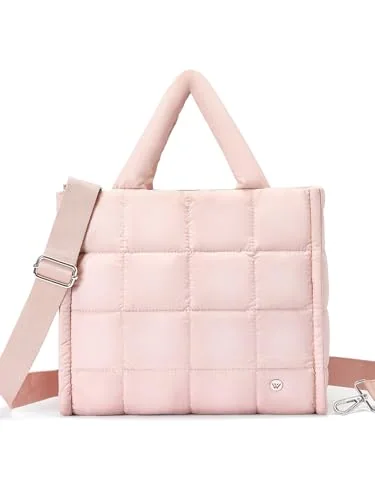
12.6 x 11.0 x 5.5 in · puffer
4.6 out of 5 · 641 ratings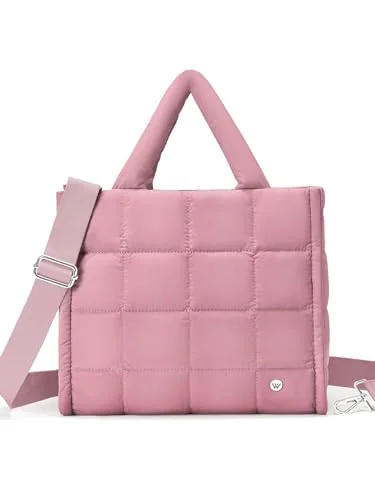
12.6 x 11.0 x 5.5 in · puffer
4.6 out of 5 · 641 ratings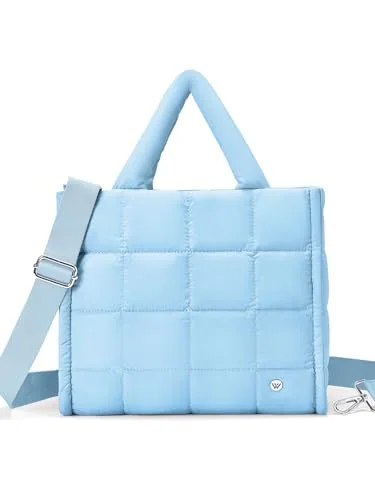
12.6 x 11.0 x 5.5 in · puffer
4.6 out of 5 · 641 ratingsKeep reading
Strap width, drop length and where the load sits. What the orthopaedic guidance says, and a weight budget measured across our own range.
1,877 words
What nylon is by legal definition, what quilting adds, why water resistant is not waterproof, and how to wash a bag without flattening it.
1,754 words