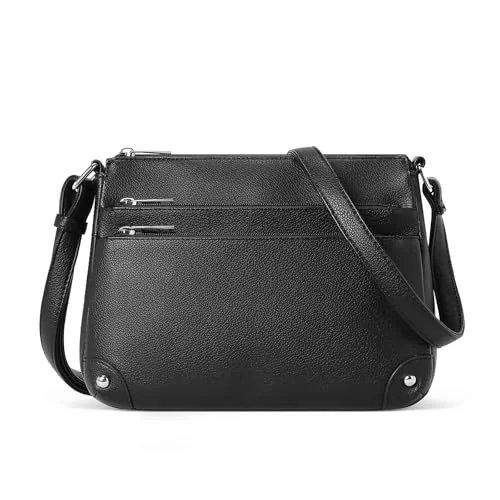
Crossbody Bag
Medium Crossbody Bag, Black
4.6 out of 5 · 4,157 ratings$29.99
Four materials, four different jobs. This is the comparison we would give you across a counter, including the two places where our own material loses.
Bag descriptions use material words the way menus use the word artisan. Nylon, canvas, vegan leather and full-grain all mean something specific, and two of those four have definitions written into federal rules.
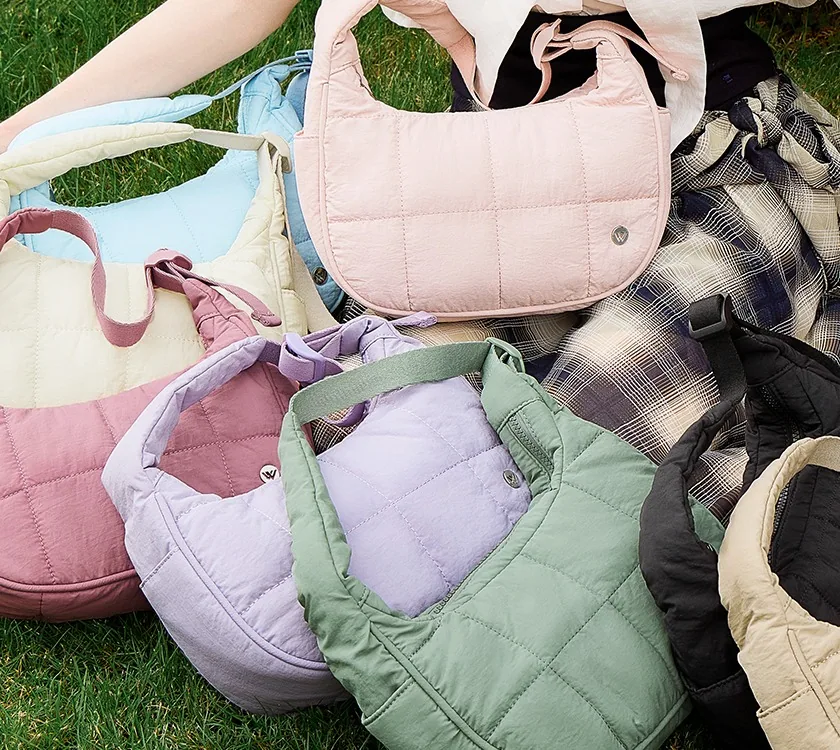
We make quilted nylon bags, so read this knowing where we stand. We have tried to be useful rather than flattering, and the table near the end names the two things nylon does worse than leather.
If you only read one section, read the one on water. It is where most disappointment with a bag comes from, and it is entirely avoidable.
Nylon is not a brand and not a texture. It is a fibre class with a definition in the rules under the Textile Fiber Products Identification Act.
A manufactured fiber in which the fiber-forming substance is a long-chain synthetic polyamide in which less than 85 percent of the amide linkages are attached directly to two aromatic rings.
In plain words: a long synthetic chain with amide links along it. That chemistry is why a nylon thread can be thin and still hard to tear, and why it recovers its shape after being crushed in a car boot.
The same rules require the generic fibre name to appear where a fibre makes up five percent or more of a textile product, and that is the reason a label says nylon rather than a trade name.
Two nylon fabrics can behave completely differently. Weight, weave and coating change everything. A ripstop with a fine grid resists a tear spreading. A soft, calendered nylon feels like fabric rather than a tent. Ours is the second kind, chosen because a bag sits against a coat all day and a crisp technical fabric sounds like one.
Quilting is two layers of fabric with a thin wadding between them, sewn in a grid. The grid is structural, not decorative. Each square of stitching stops the wadding shifting, and the puffed squares between the stitch lines resist folding in a way flat fabric does not.
That is how a soft bag holds a shape without a frame, a base board or metal feet. Take those three things out of a bag and you remove most of its weight.
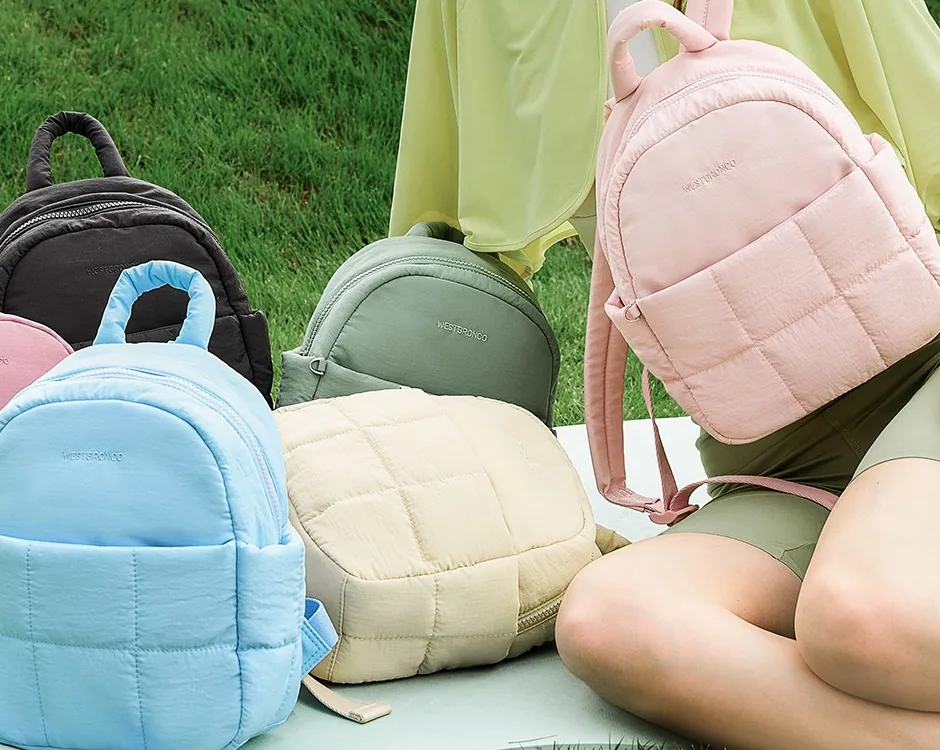
The cost is real and we would rather name it. A quilted bag folds over when it is empty. It will not stand on a restaurant floor waiting for you. A hard object inside it prints through the outside more than it would through a structured bag.
There is also a limit on how much wadding is useful. Too little and the quilting is decoration. Too much and the bag eats its own volume, so a bag that measures ten inches wide holds eight inches of things. We sew thin on purpose.
This is the sentence that saves the most disappointment. Water resistant means water beads and runs off for a while. Waterproof means a sealed barrier that does not let water through under pressure.
Almost no handbag is waterproof, ours included, and the reason is not the fabric. It is the zip and the seams. Every needle hole in a seam is a hole, and a standard zip is a row of gaps held closed by a slider. A truly waterproof bag needs taped seams and a sealed closure, and it stops looking like a handbag around the same time.
The fix is not a better bag. It is a sealed pouch inside the bag for the two or three things that must stay dry, which costs nothing and works every time.
Weight is measured. Everything else here is judgement from handling a lot of bags, and we have marked where our own material loses.
| Quilted nylon | Coated canvas | Full-grain leather | Vegan leather (PU) | |
|---|---|---|---|---|
| Weight for the same volume | Lightest | Middle | Heaviest | Middle |
| Holds shape when empty | No | Yes | Yes | Yes |
| Rain on a short walk | Beads and wipes | Beads and wipes | Marks unless treated | Fine |
| Cleaning a coffee spill | Damp cloth | Damp cloth | Cloth then conditioner | Damp cloth |
| Scratches and scuffs | Shrug them off | Show on the coating | Buff out, become patina | Show and stay |
| Ages into something better | No, stays as it started | Softens a little | Yes, that is the point | No, surface cracks in time |
| Repairable by a cobbler | Rarely worth it | Sometimes | Yes | No |
Two rows there are a straight loss for us. A quilted nylon bag will not develop character and it is not worth repairing. If those matter to you, buy leather and look after it. A good leather bag at thirty years old is a better object than it was new, and nothing we make will ever say that.
A bag usually fails at a zip, a strap joint or a clip rather than at the fabric, and those three parts are where a low price shows first.
Coil zips are a continuous spiral of nylon sewn to tape. Tooth zips are separate metal or moulded teeth. A coil zip survives being forced more kindly, because a spiral bends and springs back where a tooth snaps off its tape and leaves a permanent gap.
Judge one by feel. Run it slowly and listen. A good zip is quiet and even. A cheap one grinds at the curve, and a curve is exactly where every handbag zip lives.
Look at the point where the strap meets the body. You want short, dense stitching running back and forth across itself, called a bar tack. A single line of straight stitching there is the joint that goes first, because the whole load passes through a couple of centimetres of fabric.
Press a spring clip open with a thumbnail. It should take effort and snap back hard. A clip that opens softly will open in a bag on a train. Rings should be welded closed rather than bent into a circle, and you can see the difference by looking for the join.
None of this needs expertise. It needs thirty seconds and knowing where to look, which is the only reason this section exists.
Clothing sold in the United States carries a care label because a federal rule requires it. That rule is precise about warnings.
The warning must use words “Do not,” “No,” “Only,” or some other clear wording.
It is equally precise about where the instruction has to come from in the first place. A seller must possess, before sale, a reasonable basis for the care information they print.
To fail to possess, prior to sale, a reasonable basis for all regular care information disclosed to the purchaser.
Here is the part worth knowing: that rule covers textile wearing apparel and certain piece goods. A handbag is neither. Nothing obliges a bag to carry a care label at all, and that is the reason so many arrive with none.
Nylon forgives almost everything except heat. Heat is what flattens the wadding, and flattened wadding does not come back.
Two things we would not do. Bleach, ever, on any colour. And a hot iron anywhere near quilting, which melts a synthetic fibre before it presses it.
Ink comes out with isopropyl alcohol on a cotton bud, worked from the outside of the mark inwards, tested first on the base where nobody looks. Oil needs a dab of washing-up liquid left for ten minutes before water. Makeup usually lifts with warm water alone if you get to it the same day.
Canvas on its own is a plain woven cotton or linen. Coated canvas has a thin polymer film pressed onto the face, and the film does the work. It sheds water, wipes clean and holds a shape without any of the weight of leather.
It is the quiet middle option and it deserves more credit than it gets. A coated canvas tote stands up on the floor, survives a spilled coffee and costs a fraction of leather.
What it does badly is fold. The coating is a surface, and a surface that gets creased in the same place for two years will eventually craze along the fold line. A canvas bag that lives flat in a car boot ages faster than one that hangs on a hook.
We do not make coated canvas bags and have no reason to talk it down. If you want a structured work tote that shrugs off weather, it is a better answer than anything in our range.
If the bag has to be light, wipe clean and come in a colour you like, that is quilted nylon and that is what we make. If it has to stand up on a desk and look the same in five years, that is coated canvas. If it has to become an object you hand on, that is leather.
Vegan leather is the one we would think hardest about. It handles rain and looks smart on day one, and the polyurethane surface eventually cracks whatever you do. We use it on a few pieces because people want the look, and we would rather tell you what it does at year four than let the word vegan carry the whole argument.
Match the material to the day and the bag stops being a compromise. That is the entire point of knowing any of this.
Where this came from
Office of the Federal Register
16 CFR Part 303, Rules under the Textile Fiber Products Identification Act
Office of the Federal Register
16 CFR Part 423, Care Labeling of Textile Wearing Apparel
Every source above was opened and read on the date shown. Where a page says something we cannot verify ourselves, we quote it and name it rather than restating it as our own.
Shop what this piece is about
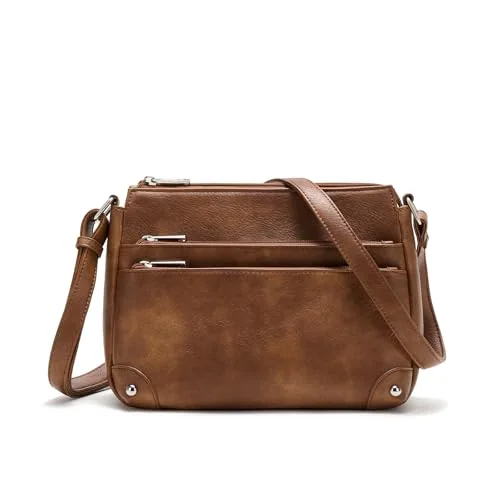
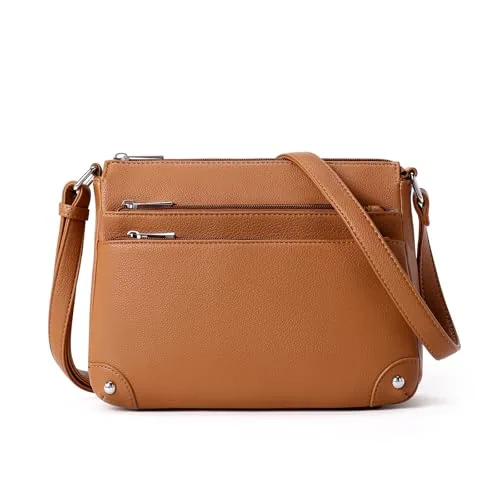
10.2 x 4.1 x 7.7 in
4.6 out of 5 · 4,157 ratings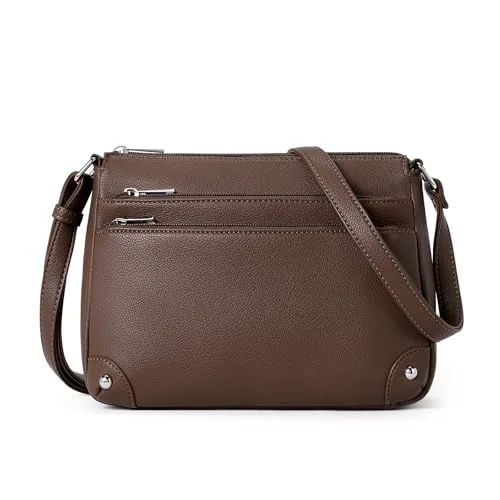
Keep reading
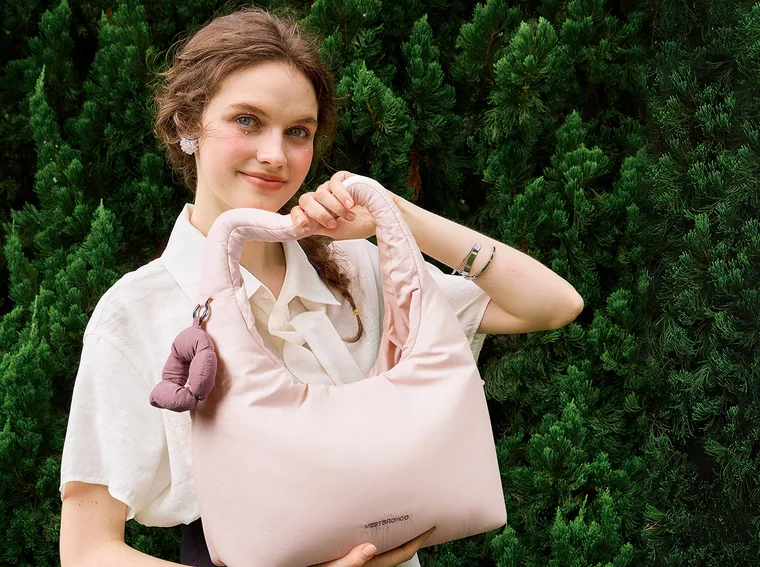
Strap width, drop length and where the load sits. What the orthopaedic guidance says, and a weight budget measured across our own range.
1,877 words
Why bag dimensions mislead, what everyday objects really take up, and a ladder of silhouettes measured across every piece we make.
1,691 words